 Skip to content

When planning a new kitchen, most people spend a great deal of time thinking about cabinetry, colours and layout — and rightly so. But appliance choices matter just as much, and they deserve the same level of careful thought.
The right hob shapes how a kitchen feels to cook in, how easy it is to maintain, and how well it continues to serve you over many years. Get it right and it becomes one of the most satisfying parts of the kitchen. Get it wrong and it is something you notice every single day.
At Nü Kitchen, appliances are never treated as an afterthought or left to the end of the design process. From the very first conversation, we help our clients think carefully about how they cook, how they entertain, and which appliance choices will genuinely serve them well — not just now, but for the years ahead. We work in partnership with some of the finest appliance manufacturers available, supplying both the kitchen and the appliances as a single, thoughtfully planned whole.
Increasingly, that conversation is leading our clients towards induction cooking.
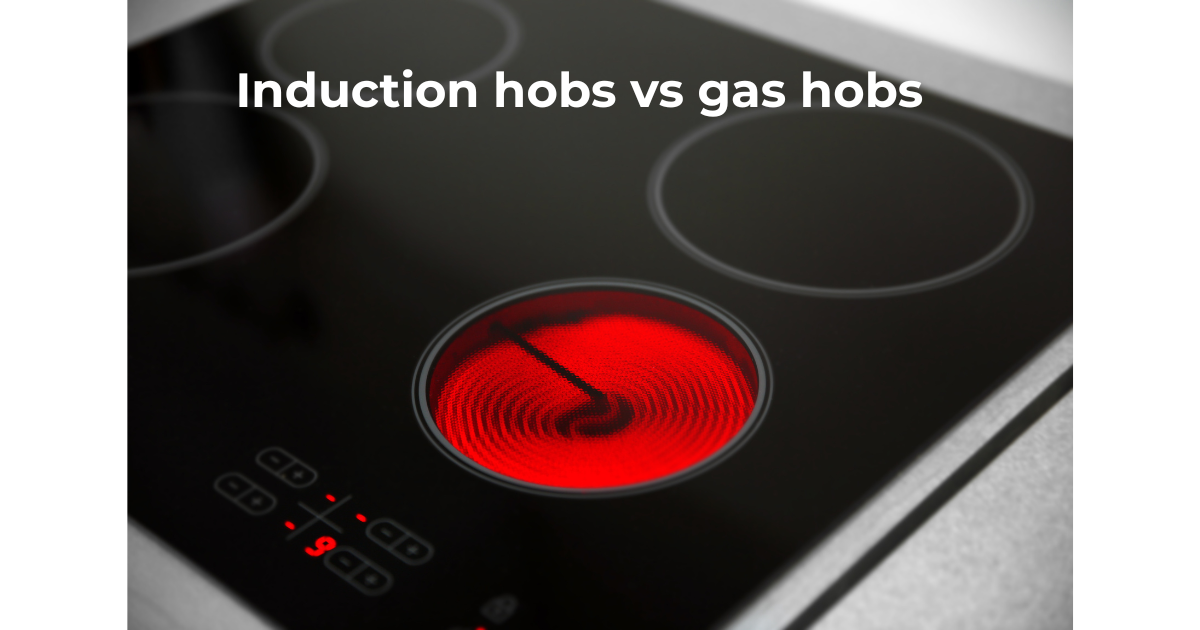
What is an induction hob?
An induction hob uses electromagnetic technology to heat the pan directly, rather than heating the glass surface itself. Unlike older electric hobs, it responds almost instantly when heat levels are adjusted, offering a level of precision that rivals — and in many cases surpasses — traditional gas.
The result is a hob that is highly responsive, more energy efficient and significantly easier to keep clean. It also sits beautifully within a considered kitchen design, contributing to a calmer, less cluttered space that is a pleasure to spend time in — something that matters more, not less, as the years go on.
Why more people are moving away from gas
Across West Berkshire and the surrounding villages, mains gas is not always available. In many properties, gas cooking relies on LPG bottles or alternative fuel systems, which can add complexity, ongoing maintenance and rising running costs over time.
Beyond availability, the broader shift towards electric heating — including air source heat pumps and new building regulations that are gradually reducing reliance on gas infrastructure — means that many of our clients are already thinking carefully about the longer-term picture for their homes. For those making that transition, induction cooking is the natural and future-proof next step.
Because heat transfers directly into the pan rather than being lost to the surrounding air, induction is also significantly more energy efficient than gas. As energy costs continue to fluctuate, that efficiency becomes increasingly meaningful. Over the lifespan of a kitchen designed to last many years, reduced energy use, lower maintenance and simpler ventilation requirements all add up to genuine, long-term value.
Does induction give you the same control as gas?
One of the most common concerns we hear — particularly from those who have cooked on gas for many years — is that induction lacks the same responsiveness and immediacy. It is a perfectly understandable reservation, and one worth addressing properly.
Modern induction technology not only matches the responsiveness of gas, it frequently surpasses it. For those who take real pleasure in cooking well, the precision available on a quality induction hob is genuinely impressive. Delicate sauces, long-simmered stocks, careful reductions — the kind of cooking that rewards patience and attention — are all areas where induction excels. Temperature changes happen almost instantly, and low-heat control in particular is far more consistent than on gas.
Most of our clients who make the switch find that any initial hesitation quickly gives way to appreciation. The control is there; it simply works differently — and usually better.
Thinking long-term: appliances that last rather than appliances that are fashionable
For many of our clients, a new kitchen is a significant investment in a home they intend to stay in for the foreseeable future. That shifts the conversation in an important way. Rather than asking what is popular right now, the more useful question is: which choices will continue to serve us well in five, ten or fifteen years’ time?
Trends in kitchen design come and go. Appliance technology, on the other hand, has its own trajectory — and induction is firmly at the heart of where domestic cooking is heading. As homes move increasingly towards electric systems, as gas infrastructure gradually recedes and as energy efficiency becomes ever more relevant, induction cooking becomes not just a sensible choice for today but a well-considered one for the long term.
Choosing appliances that are built around quality and longevity — rather than what happens to be fashionable — is something we actively encourage. The goal is a kitchen that still feels completely right in a decade: easy to use, easy to maintain, and as relevant on the day it was designed. Induction aligns naturally with that way of thinking.
The practical advantages — day to day and over time
Effortless cleaning and maintenance
For many of our clients, this is one of the most valued benefits of all. Because the glass surface does not get as hot as a traditional ceramic hob, spills are far less likely to burn on. In most cases, the hob wipes clean in a matter of seconds. There are no burner rings to dismantle, no cast iron grates to lift and scrub, no awkward corners to work around. After years of managing a gas hob, the difference is considerable — and over time, genuinely freeing.
That ease of maintenance extends beyond just the hob itself. Without an open flame, there is no combustion residue in the kitchen air, which can simplify extraction requirements and reduce the build-up that gas cooking tends to leave on surfaces and cabinetry over time.
Peace of mind and safety
Induction offers a level of reassurance that is difficult to overstate. There is no naked flame, no combustion and no gas supply to the cooking surface. The surface itself remains largely cool to the touch — only the area directly beneath the pan generates any meaningful heat, and only while the pan is present. The moment the pan is lifted, the heat stops immediately.
Features such as automatic pan detection, clearly visible residual heat indicators and automatic shut-off functions mean the hob is always working to keep things safe and straightforward. For those who want to enjoy their kitchen with genuine peace of mind — whether cooking for themselves, for friends or for visiting family — these are not minor conveniences. They make a meaningful difference to how comfortable and confident the kitchen feels, every day.
A calmer, more beautiful space
Induction hobs work beautifully within a considered kitchen design. When switched off, they sit almost invisibly within the worktop, allowing the wider design, materials and cabinetry to take centre stage. This is particularly effective in open-plan kitchens, on islands, and in spaces where cooking flows naturally into dining and entertaining. Whether the style is a contemporary classic, a painted shaker or a more traditional scheme, induction contributes to a refined, uncluttered result — a kitchen that looks as good as it works.
Classic kitchen design, modern cooking performance
One of the most persistent misconceptions about induction is that it only suits ultra-modern kitchens — sleek, handleless, minimal. In reality, it works beautifully across every style, including the more classic, characterful kitchens that many of our clients prefer.
This is where the choice of range cooker becomes particularly interesting. Brands such as Rangemaster — long associated with the warmth and presence of a traditional kitchen — now offer models with induction hobs as standard. The result is everything that has always made a range cooker so appealing: the visual weight and craftsmanship, the classic proportions, the sense of a kitchen built around cooking and comfort. But beneath that timeless exterior sits genuinely contemporary cooking technology — precise, efficient, effortless to clean and designed for the long term.
For clients who love the look and feel of a traditional kitchen but want the very best in cooking performance, this combination is a compelling one. You do not have to choose between the aesthetic you love and the technology that will serve you best. A Rangemaster with induction gives you both.
The same principle applies across other traditional kitchen styles. Painted shaker cabinetry, farmhouse details, handcrafted joinery — all of these sit just as comfortably alongside an induction hob as they do a gas one. Modern cooking technology no longer requires any compromise on warmth or character.
Planning your kitchen as a whole: layout and workflow
Choosing the right hob is only one part of a much wider conversation — and at Nü Kitchen, we never treat it in isolation.
Where the hob sits in relation to the oven, the preparation space and the sink shapes how naturally and efficiently the kitchen works. A well-planned kitchen is one where everything flows: where there is enough room to cook and serve without crossing the room, where hot dishes travel safely from oven to table, and where the layout supports the way the household actually uses the space.
These are the kinds of conversations we have with every client — carefully, and early in the design process — because the decisions that shape how a kitchen works day to day are just as important as those that shape how it looks.
Integrated extraction
Another significant advantage of Induction hobs vs gas, is integrated extractors. This is where the extractor is literally integrated into the hob itself. This type of induction hob is particularly well suited to islands or peninsulas, as it removes the need for a ceiling mounted extractor, which practically and aesthetically can be less than ideal.
We have both integrated extractors, and rising extractors that are located in the worktop directly behind an induction hob on display in our showroom.
Furthermore, the induction hob suppliers we work with all provide complimentary apps to support the ongoing maintenance of your hob and integrated extractor. For example, the linked apps will tell you when the filters need to be cleaned or swapped. When it’s time for routine filter cleaning, it’s normally a case of lifting them out of the hob and popping them in the dishwasher – it couldn’t be simpler.
Guidance through every appliance decision
Appliance choice can feel overwhelming. The market is wide, options are numerous, and the language used to describe features is not always straightforward. Part of our role at Nü Kitchen is to make that process manageable and genuinely enjoyable.
We help our clients work through the decisions that matter: whether a single oven or a pair works better for the way they cook and entertain; whether a steam oven or a combination oven would add real value to their cooking; whether a pyrolytic self-cleaning oven would be worth the investment given how much easier it makes maintenance over time. These are conversations, not checklists — and we take the time to understand each client’s cooking habits, preferences and priorities before making any recommendation.
The goal is always to balance aesthetics with practicality: to find appliances that are beautifully made, genuinely useful and built to last — and to integrate them into a kitchen design where everything works together. Not appliances chosen for their novelty, but appliances chosen because they are right for the person who will use them, every day, for many years to come.
Frequently asked questions
Are induction hobs cheaper to run than gas? Generally, yes. Because heat transfers directly into the pan rather than being lost around the sides, induction is typically more energy efficient — though exact savings will vary depending on cooking habits and how the home is set up.
Do induction hobs require any specific electrical services to work?
It depends. To get the best performance from an induction hob, then a dedicated direct electrical supply is needed. However, there are some models that can be run without this. We always discuss this with our clients to see what the best option is for their space and the nature of the project.
Do induction hobs suit traditional kitchen styles? Absolutely. Many traditional-style range cookers, including Rangemaster models, are now available with induction hobs — combining a classic, timeless appearance with the very best in modern cooking performance.
Can induction hobs be fitted into kitchen islands? Yes, and they are among the most popular island choices. Their clean, unobtrusive appearance and compatibility with integrated extraction systems make them ideal for open-plan spaces designed with entertaining in mind.
Do induction hobs scratch easily? Modern induction surfaces are highly durable, though it is advisable to avoid dragging heavy cookware repeatedly across the glass.
What ovens work best alongside an induction hob? This depends entirely on how the kitchen is used. We work closely with each client to find the right combination — whether that is a single oven, a pair of ovens, a steam oven, a combination oven or a pyrolytic self-cleaning model — as part of the wider design and planning conversation.
How long do induction hobs last? A good quality induction hob, properly used and maintained, should give many years of reliable service — making it well suited to a kitchen designed to be a long-term investment rather than something that will need revisiting in a few years.
Ready to start planning your kitchen?
If you are considering a new kitchen and would like thoughtful, unhurried guidance — from appliance choices and layout through to the finishing details — the team at Nü Kitchen are here to help every step of the way. We take care of everything from the first conversation right through to the finished installation, ensuring the whole journey feels as considered and personal as the kitchen itself.
We design and install bespoke, handcrafted kitchens across Berkshire, Hampshire, South Oxfordshire and North West Wiltshire working closely alongside each client to create a space that is genuinely made for the way they live — and built to stay that way.